How to Fish for Carp: A Step-by-Step Beginner’s Guide
Last updated: October 27, 2026 · Written by Erni, World Classic Baits
To catch a carp, put a small, soft bait on the bottom, feed the spot first, and wait. Carp are bottom feeders with sensitive mouths, so the whole method follows from that. This guide walks you through it in six steps. It’s built on advice from state fisheries agencies and a field study on wild carp.
The short version
- Fish on the bottom, no bobber. Carp feed off the lakebed and drop a bait that feels wrong.
- Feed the spot before you fish. Missouri’s agency suggests five to 10 cans of corn, 10 to 20 feet out.
- Use a small hook. It only needs to hold two or three kernels of corn.
- Set the drag light and stay by your rod. A big carp can pull a rod into the water.
- Keep the fish wet. Cradle it with both hands and never lift it by the gill cover.
What gear do you need for carp fishing?
Less than you think to start. A Missouri Department of Conservation writer says “just about any rod and reel will do”. He fishes 4 to 8 lb line and a No. 8 or smaller bait-holder hook. He picks that light tackle on purpose, for the challenge.
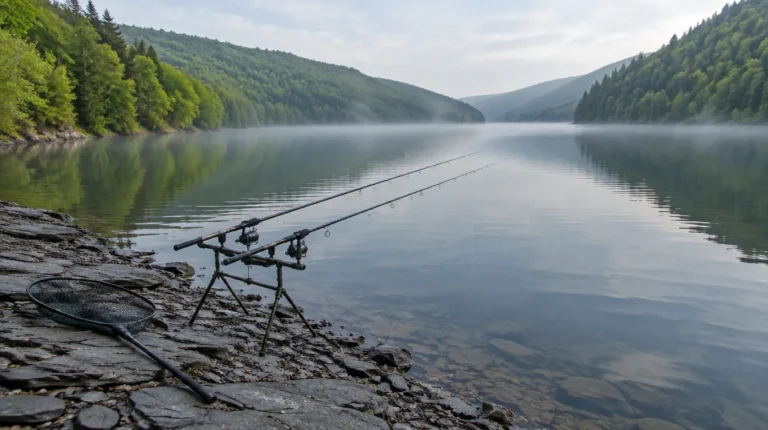
For bigger fish, agencies go heavier. Connecticut’s fisheries agency suggests a heavy spinning rod over 8 feet. Pair it with a reel that holds 200+ yards of 20 lb line. New York’s agency prefers rods of 8½ to 12 feet and size 4 to 8 hooks.
| Gear | Starter setup (ponds, small fish) | Big-fish setup (rivers, reservoirs) |
|---|---|---|
| Rod | Any rod you already own | Heavy spinning rod, 8-12 ft |
| Reel | Any spinning reel | Holds 200+ yd of line; a baitrunner-style reel lets a running fish take line |
| Line | 4-8 lb monofilament | 20 lb monofilament |
| Hook | No. 8 or smaller bait holder | Size 4-8 |
| Landing | A landing net big enough for the fish | A big landing net, plus a sling if you weigh fish |
Why a baitrunner? Connecticut’s agency explains that carp make a strong first run. A reel with a free-spool setting lets the line leave the spool instead of the fish yanking your rod.
Step 1: Where do you find carp in a pond, lake or river?
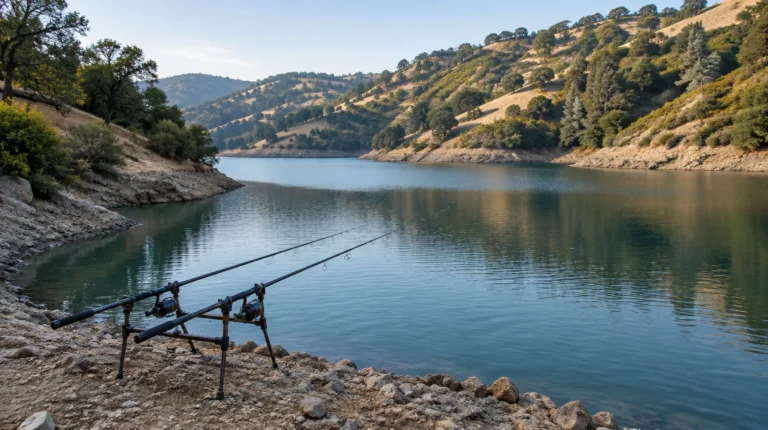
Start shallow and sheltered. In lakes and ponds, Missouri’s agency finds that the backs of coves, 2 to 8 feet deep, work best. In rivers, look for different water depending on the size of the river.
| Water | Where to look |
|---|---|
| Lake or pond | Backs of coves, 2-8 ft deep |
| Stream or small river | Deep holes with little current near cover such as logs and brush piles |
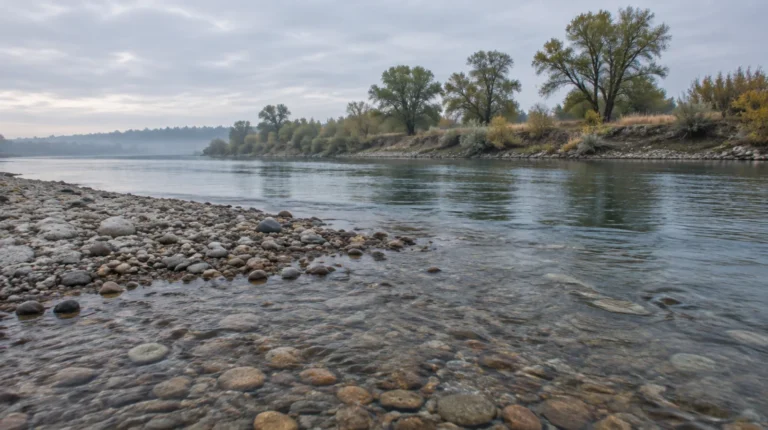
| Big river | Shallow backwaters, side channels, scour holes and areas around dikes |
Your state may publish a list of carp waters. New York’s does, with fish sizes for each one – see our guide to carp fishing in New York. Pennsylvania flags its best carp lakes and rivers too, in our guide to carp fishing in Pennsylvania. For the national picture, start with our guide to carp fishing in the USA.
Step 2: How do you bait up a carp swim?
Throw in free bait before you cast. Missouri’s agency writer uses five to 10 cans of corn, 10 to 20 feet from shore. Carp usually find a baited spot within a few hours. A large group of fish may take a day or more to build up.
Research backs this up. In a 2020 University of Minnesota study, wild carp “responded quickly to bait”. Over 20 days of feeding cracked corn, 133 tagged carp visited the bait sites 616,593 times. The number of different carp peaked four to five days after baiting began.
- Carp came in most from dusk to dawn. If you can, keep fishing into the evening.
- Big fish dominated the bait sites. The researchers describe carp foraging as “dominated by large-bodied individuals.”
- Corn picks out carp. The same paper notes that native fish in the region don’t appear to be attracted to cracked corn.
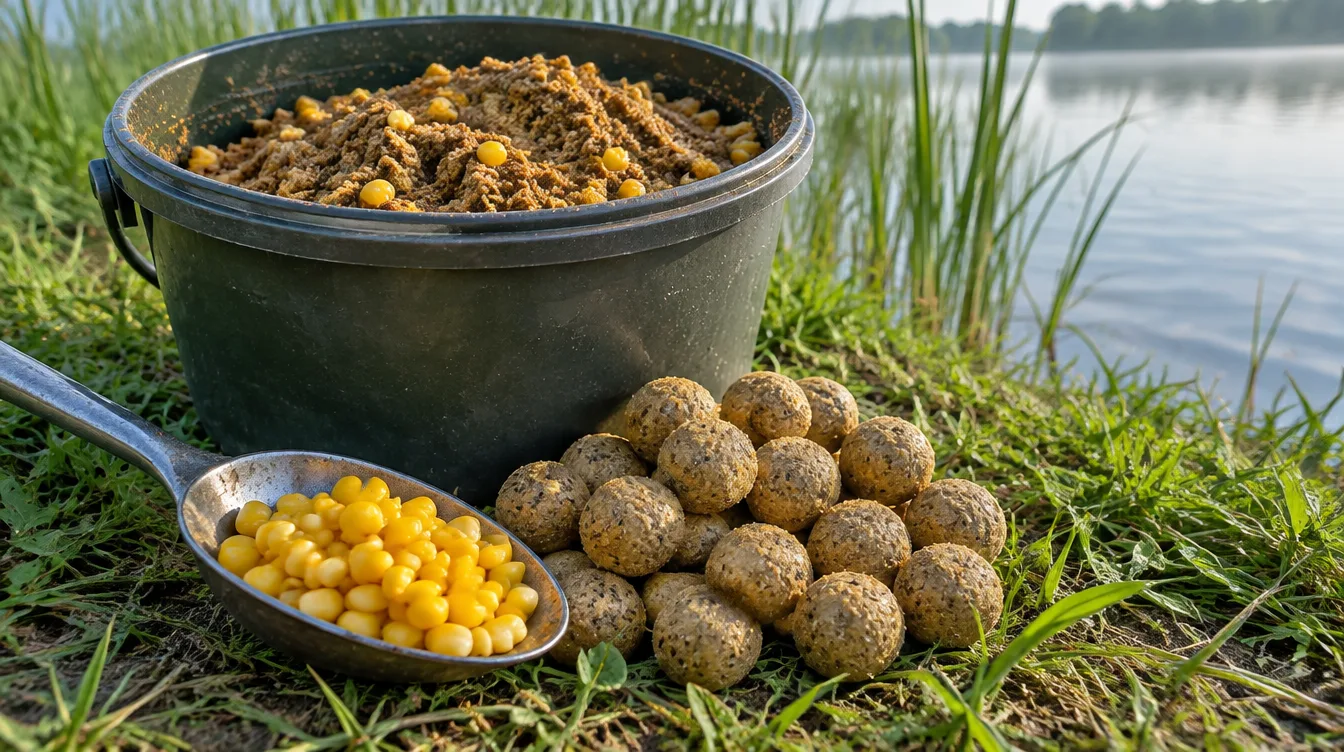
Connecticut’s agency calls this pre-baiting: feeding a spot ahead of time so carp are already coming there to eat. You can feed with plain corn. Or use a groundbait like Erni’s Method Mix, which breaks down and holds fish in one place. Pellets such as Active Pellets do the same job.
Check your state first. Chumming rules differ from state to state. In New York, for example, the only chumming ban in the general rules is on fish eggs. California bans chumming in most inland waters – see our California carp fishing guide.
Step 3: What bait should you use for carp?
Corn, dough baits and boilies cover almost every situation. Missouri’s agency lists “dough balls, whole kernel corn and worms”. Connecticut adds boilies, which it describes as processed dough balls. Illinois’ wildlife magazine called boilies “a European creation” made for “the larger, smarter carp.” To match bait to what carp eat in the wild, see our guide to the best bait for carp.
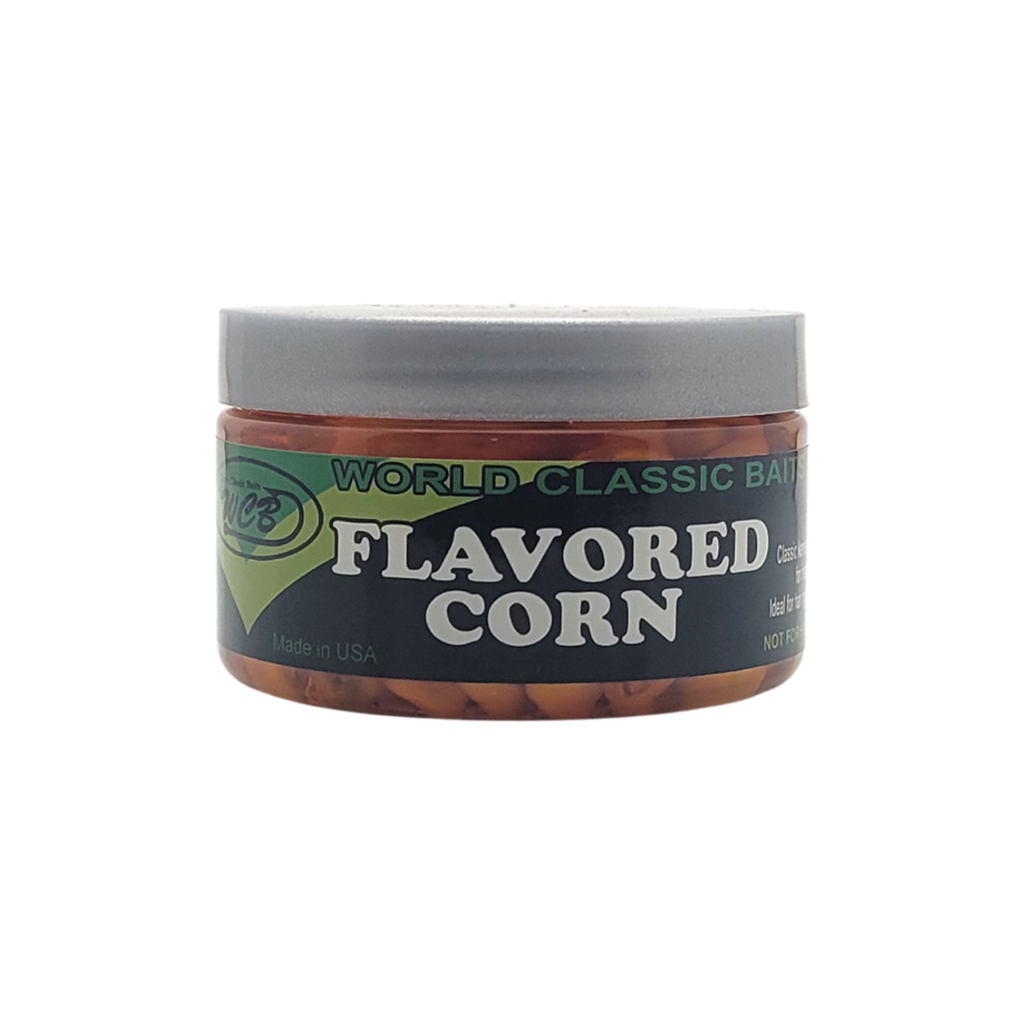
| Bait | Best for | Hook it how | Try |
|---|---|---|---|
| Corn | Your first session, any water | Two or three kernels on a small hook, or on a hair | Flavored Corn, Jumbo Corn |
| Dough bait | Quick bank sessions, pay lakes | Molded around the hook | Dough baits |
| Boilies | Bigger fish, waters with lots of small panfish | On a hair rig | 16mm Boilies, 20mm Boilies |
| Groundbait | Feeding the swim, method feeders | Squeezed around a feeder | Erni’s Method Mix |
On a budget? Missouri’s agency notes that feed corn is cheaper than canned corn. The catch: you have to soak it in water for a couple of days first. Not sure where to start? Our guide to carp bait for beginners covers what to buy first. Boilies vs. corn vs. pellets explains when each one wins.
Step 4: How do you rig a carp bait?
Put the bait on the bottom with no bobber. Missouri’s agency writer explains why: “A carp will drop a bait immediately if it feels the slightest resistance.” He rarely uses a weight at all. That same sensitivity is the reason the hair rig exists.
On a hair rig, the bait hangs on a short piece of line below the hook. The hook point stays bare. The American Carp Society credits it to Len Middleton and Kevin Maddocks in England during the late 1970s. They built it because carp learned to link danger with line in the mouth and a bait that didn’t behave naturally.
- Carp test food with their mouths. Connecticut’s agency notes their “very sensitive mouths” and barbels, which they use to find food in mud.
- Their barbels taste. Minnesota’s DNR describes carp barbels as “like tiny fingers packed with taste buds” that they drag along the bottom.
- A hair rig keeps the hook point clear. New York’s agency adds that fish don’t swallow it as deeply, so you can release them quickly.
Fishing plain corn? A bare hook with two or three kernels works too. Missouri’s writer sizes the hook so it’s “just large enough to hold two or three kernels of corn.” Use a No. 10 or smaller treble hook for dough bait.
Step 5: How do you hook and land a carp?
Set your drag light and stay close. Missouri’s agency writer sets the drag “fairly light to avoid line breakage.” He also warns that “large carp can easily pull a rod and reel into the water.” In New York, staying with your rods is the law: anglers must be “in immediate attendance.”
- Let the first run go. A baitrunner or a light drag gives line instead of snapping it.
- Keep the rod in reach. Never prop it where a running fish can drag it in.
- Net it, don’t drag it. Connecticut’s agency asks anglers to “use an appropriate size net.”
Step 6: How do you release a carp safely?
Keep it wet, keep it short, and support its body. Connecticut’s agency is blunt: “Do not ever pick a carp up vertically by the gill cover!” Hold it for a photo by cradling it with both hands. If you weigh it, do it in the net or a sling.
- Limit air time. Keep Fish Wet warns that even 10 to 20 seconds out of water can harm some species.
- Wet your hands and keep the fish over the water, so its slime layer stays intact.
- Use a rubber net. It damages slime, scales and fins less than knotted nylon.
- Crimp the barbs. Barbless hooks come out faster and do less damage. They’re required in New York City parks.
- Watch the spines. Carp have three stout, serrated spines on the dorsal and pectoral fins.
Before you release any carp, make sure it’s a common carp. Some states require anglers to kill invasive carp species. Our USA carp guide shows how to tell them apart and what each state requires.
When is the best time to fish for carp?
Mornings and evenings, but don’t skip midday. Missouri’s agency writer finds carp feed most actively in the morning and evening hours, adding that “midday can also be productive.” At baited spots in the Minnesota study, carp were most active from dusk to dawn.
Water temperature matters more than the clock. Carp feed hardest in warm water and slow down in the cold. Our USA guide covers how temperature changes feeding through the year.
Frequently asked questions
What size hook do I need for carp?
Smaller than most beginners expect, because even big carp have small mouths. Missouri’s agency writer uses a No. 8 or smaller hook for corn. New York recommends size 4 to 8. Pick one that just holds your bait.
What pound line should I use for carp fishing?
It depends on the water. Light 4 to 8 lb line works in open ponds with small fish. For big rivers, snags and fish over 20 pounds, Connecticut’s agency suggests 20 lb line with 200+ yards on the reel.
Do you need a hair rig for carp?
No, but it helps. Corn on a bare small hook catches plenty of carp. A hair rig leaves the hook point exposed, which hooks wary fish better. It’s also the standard way to fish boilies.
How long does it take for carp to find bait?
Usually a few hours, according to Missouri’s agency. A large group can take a day or more to build up. In the Minnesota field study, the number of different carp at baited spots peaked four to five days after baiting began.
Can you catch carp with bread or worms?
Yes. Missouri’s agency lists worms with corn and dough balls as proven carp baits. New York’s agency lists bread among the kitchen baits that work. Corn stays the easiest place to start.
About the author
Erni is the bait maker behind World Classic Baits, which has made groundbaits, boilies, and pellets for carp in the USA since 2008. Every recipe is tested in real fishing sessions before it reaches you.
Sources
- Missouri Department of Conservation – “Carpe Diem,” Missouri Conservationist, June 2001 (archived)
- Missouri Department of Conservation – Carp
- Connecticut DEEP – Common carp fishing in Connecticut
- NYSDEC – Carp fishing in New York
- Illinois DNR – “What’s a Boilie Bait?,” OutdoorIllinois, July 2005
- Minnesota DNR – Fish Sense (Minnesota Conservation Volunteer)
- American Carp Society – Rig design
- Keep Fish Wet – Principles and Tips
- Hundt, White, Craft & Bajer (2022), “Social associations in common carp (Cyprinus carpio),” Ecology and Evolution 12: e8666, doi:10.1002/ece3.8666
Agency advice and rules were read on 10/27/2026. Check your state’s current fishing regulations before you go.